Distribution pole or transmission tower: how your register should classify each
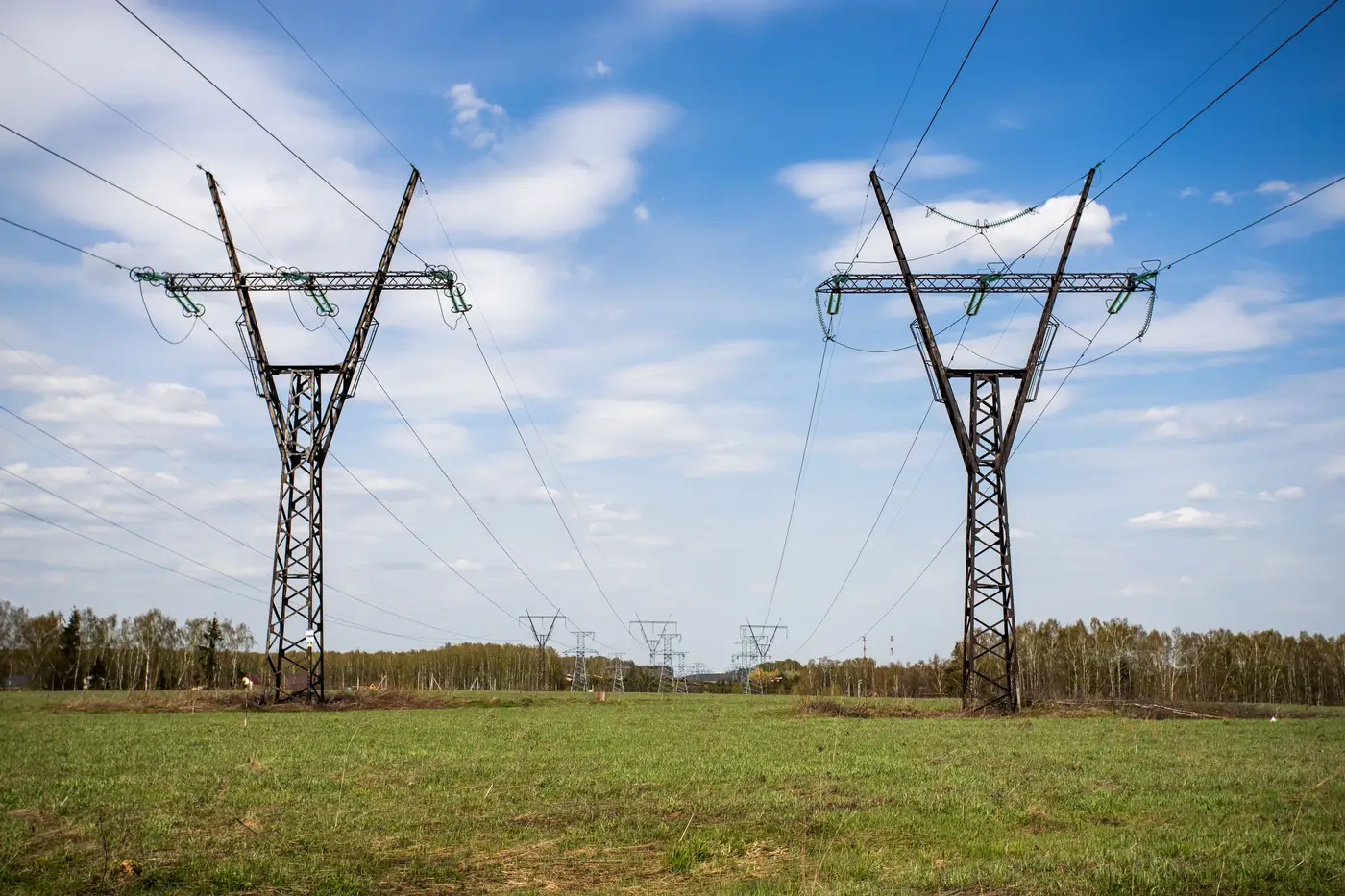
Ask three different people in your utility how the GIS tells a distribution pole from a transmission tower, and you'll likely get three answers. One points to the structure type code. Another points to voltage class. A third says "it's whatever the original surveyor typed into the notes field in 2003." All three are technically in the schema. Only one of them is reliable enough to run a reconciliation against.
The confusion isn't really about poles and towers looking different in the field. A 40-foot wood pole and a 150-foot steel lattice structure are not hard to tell apart with your own eyes. The confusion is that most asset registers never separated the question "what is this structure made of and shaped like" from "what circuit does it carry" from "who owns it." Those three facts got folded into one field somewhere during a legacy migration, and they've been drifting apart ever since.
Structure type is not the same as asset class
In most GIS schemas, structure type describes the physical thing: wood pole, concrete pole, steel monopole, lattice tower, H-frame. Asset class (sometimes called facility class or plant account in the FERC sense) describes the regulatory and operational bucket the structure belongs to: distribution plant or transmission plant.
The two usually line up, since wood poles typically carry distribution circuits and lattice towers typically carry transmission, but not always, and that's where registers go stale. A utility running 69kV sub-transmission on wood H-frame structures, or distribution underbuilt beneath a transmission corridor on shared poles, breaks the assumption that structure type alone tells you the asset class. If your attribute table only stores "POLE" or "TOWER" and infers everything else, you'll misclassify every one of those shared or sub-transmission structures.
The fix most crews reach for is adding voltage class as its own field, independent of structure type. That's correct schema design. The problem is backfilling it across tens of thousands of legacy records that were never captured that way, which is exactly the kind of gap a register carries for a decade until someone needs it for a rate case or a reliability audit.
Where field reality and the register disagree
The classification argument matters less in theory than it does the day a crew or an auditor walks a corridor and finds something the register didn't predict: a steel monopole replacing a wood pole after storm rebuild, with the replacement never flagged as a structure type change. A distribution circuit rerouted onto an existing transmission tower's lower arm as a cost-saving measure, with no corresponding asset class update. A sub-transmission line that was reclassified on paper during a rate filing but never touched in the GIS.
None of these show up as "wrong" in a data quality report that only checks for nulls and duplicate IDs. They show up when someone compares the register against what's standing out there, structure by structure, and that comparison is the part most utilities still do with a truck roll and a clipboard rather than imagery.
That's the gap Grid Asset Inventory is built around: it reads sub-10cm aerial or drone imagery and returns a detected inventory of poles, towers, and conductors you can set next to your register, on whatever flight cadence you already run, so a classification mismatch shows up as a flagged discrepancy instead of a surprise during an outage response or a FERC Form 1 review. You still decide what the correct classification is. The imagery just tells you which structures the register and the field no longer agree on.
A workable classification check
If you're auditing your own schema before the next flight, three fields are worth separating cleanly if they aren't already: structure type (what it physically is), voltage class (what it's rated to carry), and asset class (which plant account it sits in for regulatory purposes). Keep those independent, and a shared pole carrying both a distribution tap and a sub-transmission circuit stops being an edge case your data model can't express.
If your register has never been checked against what a camera sees on the line, that kind of reconciliation is worth running before the next audit cycle.