Field notes: the winter we flew three weeks before leaf-off, and regretted it
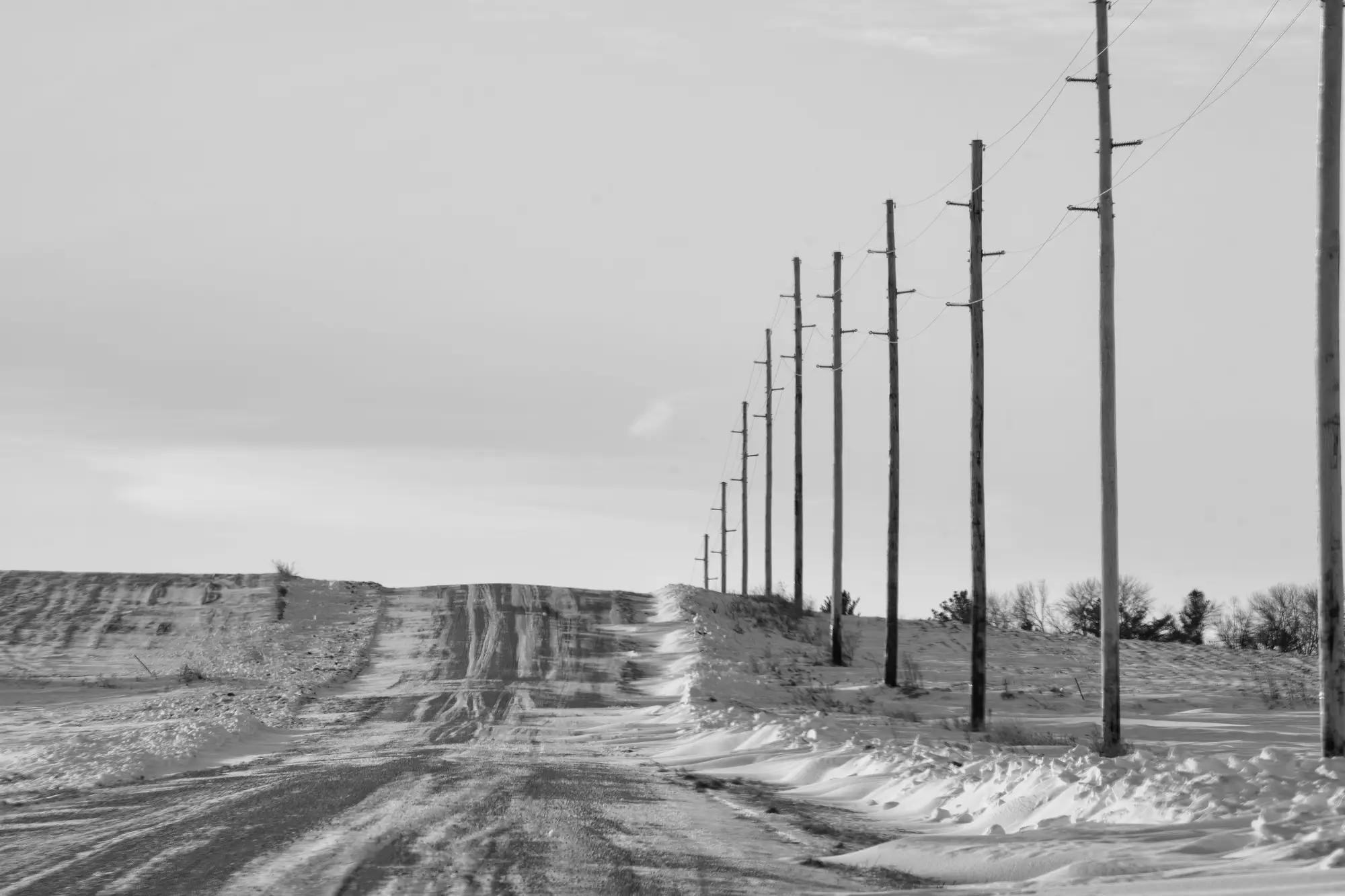
We had a weather window and we took it. That decision cost us three weeks of leaf cover we didn't know we needed.
Our annual flight was booked for a Tuesday in mid-November, right when the crew always flies that corridor. A cold front was moving in two days early, the pilot had another job lined up the following week, and the scheduler made the call that any reasonable person would make: fly now, before the window closes, instead of waiting out a storm that might push us into December. On paper, three weeks either side of leaf-off shouldn't matter much. In practice, three weeks is the difference between seeing a pole base clearly and guessing at it through a screen of hackberry and sumac that hadn't finished dropping.
We didn't find out until we sat down with the deliverable. The imagery came back sharp, sub-10cm, exactly what we'd paid for. But when we started running it against the register for that stretch of line, we had eleven structures flagged as "possible occlusion, low confidence" that in a normal year would have come back clean. Not missing poles, nothing that dramatic. Just poles whose base and crossarm detail were partly swallowed by understory that still had enough leaf mass to matter. A tower in a wet bottomland had its lower third buried in brush that, two weeks later, would have been bare.
The register said there should be a structure at that location, and the imagery, read honestly, couldn't confirm or deny it without a field crew going out to look. Flying early hadn't saved us any time at all for that segment. It had converted a desktop reconciliation into exactly the kind of manual audit we fly to avoid in the first place. We ended up sending two linemen out in January to walk six miles of right-of-way we'd already paid to photograph from the air, because the photograph wasn't trustworthy for that purpose yet.
Leaf-off isn't a fixed date on a calendar, and that's the trap. It drifts by species mix, by elevation, by whether the fall was wet or dry, by latitude if your service territory spans more than one climate zone. A line crew in the river valley might be fully bare two weeks before the ridgeline crews finish dropping leaves. If your flight plan treats "leaf-off" as a single checkbox for the whole territory rather than a gradient that moves segment by segment, you'll have good data in some corridors and compromised data in others, and you won't know which is which until someone sits down with the images and starts counting discrepancies.
What we do now is simpler and a little more boring, which is usually a sign it's the right fix. We push the flight window later by default and treat any pressure to move it earlier as a question, not a given. If a storm forces an early call, we flag the segments most likely to still be leafed out and plan a supplemental pass or a ground check for just those stretches, rather than treating the whole flight as uniformly reliable.
A reconciliation pass is only as good as the imagery underneath it, and vegetation cover is the variable that quietly decides whether that pass finds real discrepancies or just noise from the canopy. Grid Asset Inventory runs pole, tower and conductor detection against your register on whatever cadence you fly, so the leaf-off calendar matters as much as the flight plan itself.
If your crew is staring down a similar scheduling squeeze this year, it's worth checking what that detection pass turns up before you decide the flight can't wait.